Tree trimming that makes trees stronger, not just shorter.
Crown thinning, deadwood removal, and roof clearance done to arborist standards — so your trees shrug off the next storm instead of dropping limbs on your house.
Licensed & Insured We Never Top Trees Debris Hauled, Always
Four cuts we make — and one we refuse to
Good pruning is selective. Every cut has a reason: removing weight where a limb threatens your roof, opening the canopy so wind passes through instead of pushing, and clearing deadwood before it becomes a projectile. Here's what that looks like on your trees.
Crown cleaning
Dead, dying, and rubbing limbs come out — the single best thing you can do for an older oak or maple. Deadwood over a roof, driveway, or play area is the first thing we remove.
Crown thinning
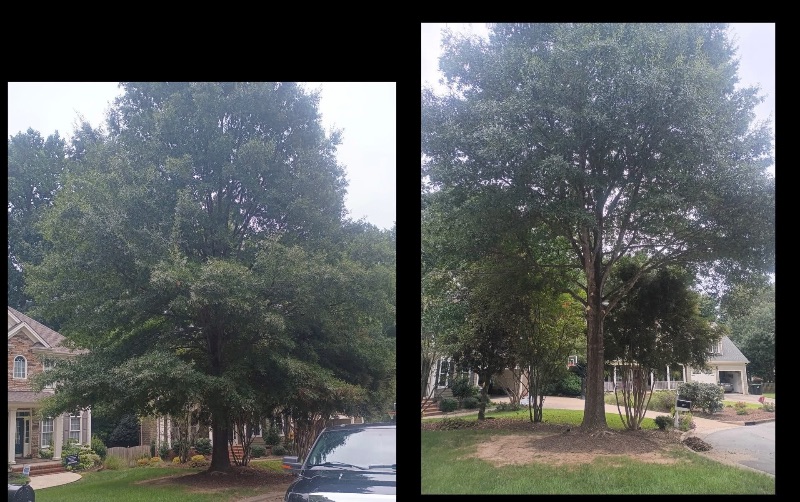
Selective interior cuts let summer storm gusts blow through the canopy rather than against it — a big deal for the broad oaks and sweetgums in older Sanford yards.
Crown raising
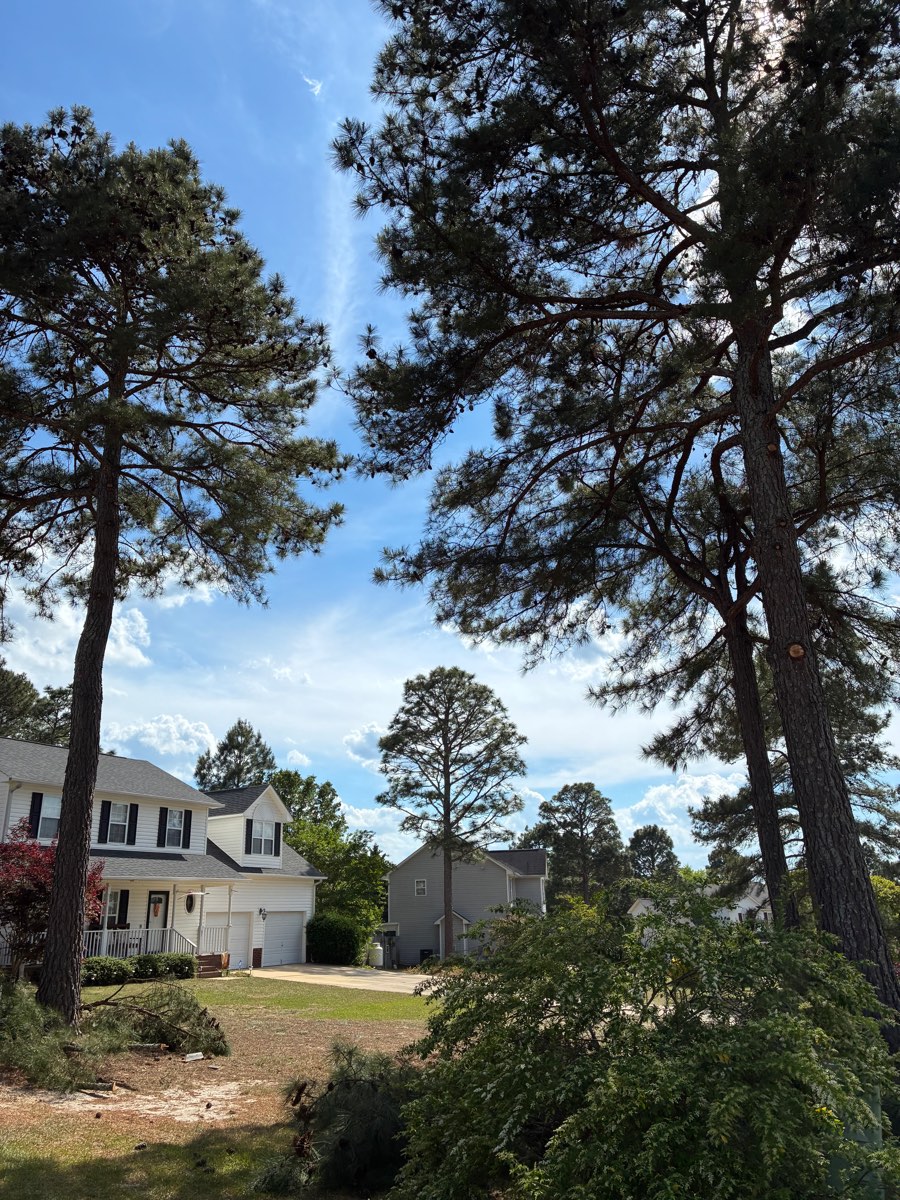
Lifting low limbs for clearance over driveways, walkways, lawns, and roofs — including limbing up tall pines so mowing under them stops being a contact sport.
Crown reduction
Where a tree has outgrown its spot, we reduce height or spread with cuts back to healthy lateral limbs — keeping structure intact instead of leaving stubs.
The cut we won't make: topping
Chopping a tree flat across the top forces weak, fast-growing shoots that break off in storms — it makes the tree more dangerous, not less. If someone quotes you a "topping job," get a second opinion. If a tree is genuinely too big for its spot, the honest answers are reduction pruning or removal.
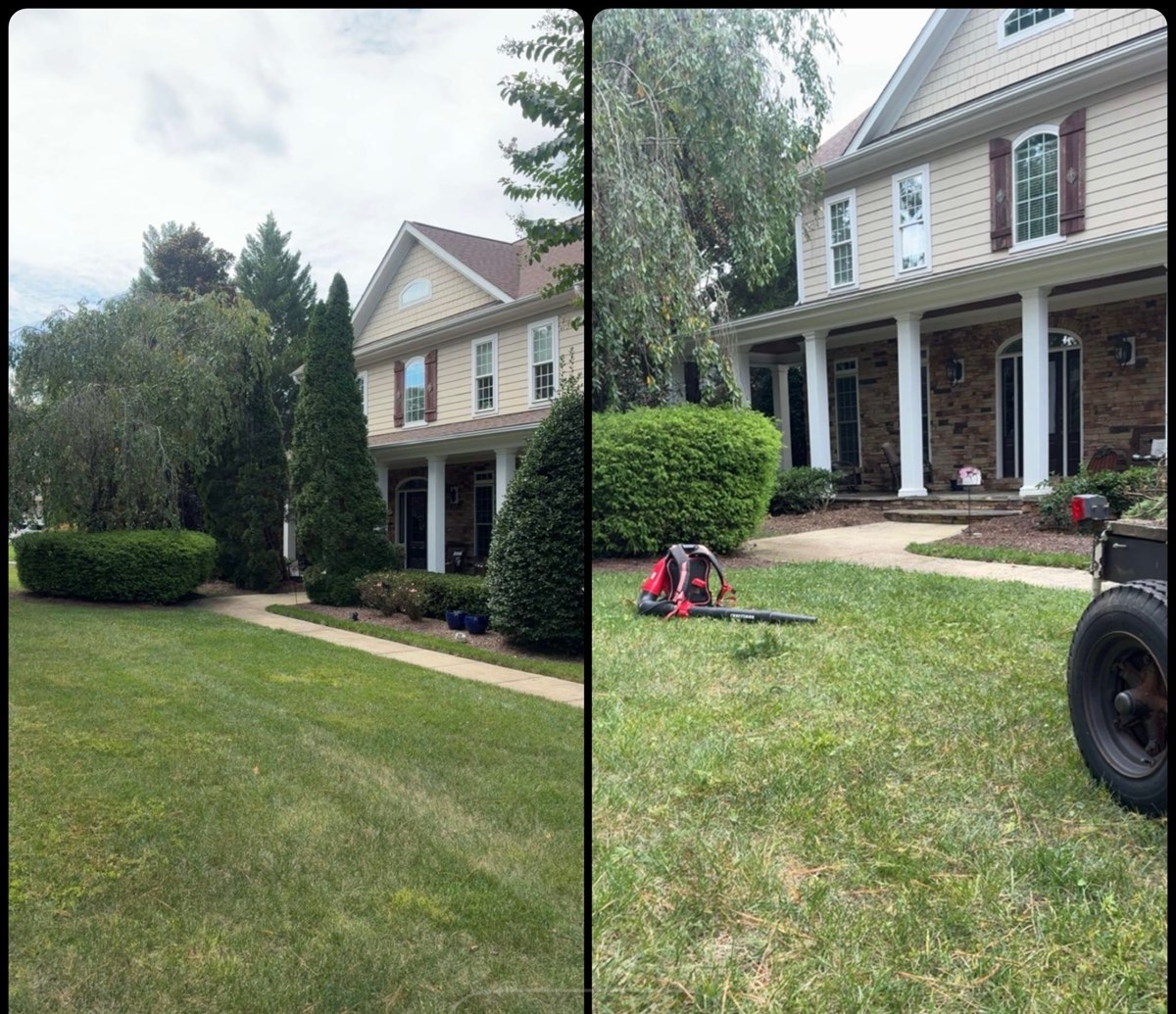
The difference a careful crew makes
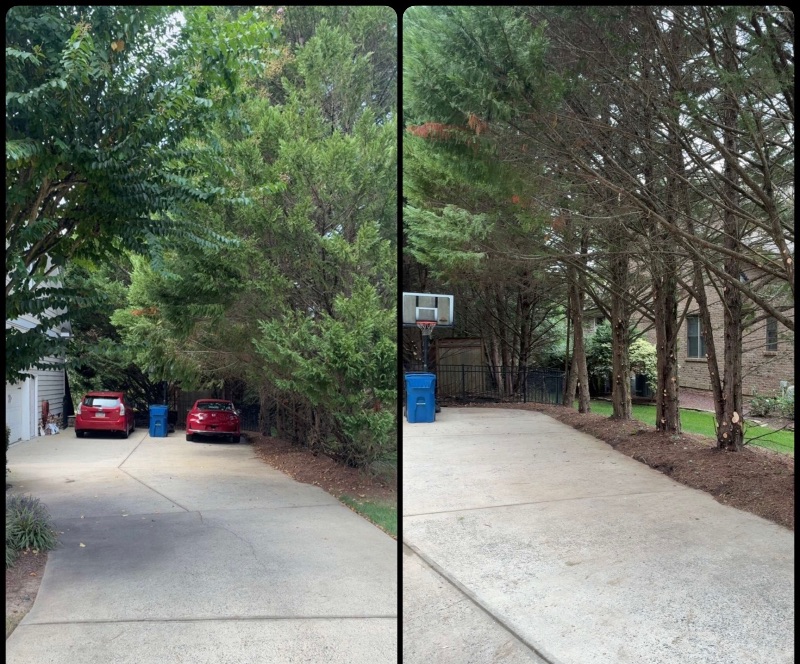
Real trimming jobs from our crew — overgrown to opened-up, without butchering the tree.
Timing matters in central North Carolina
Late winter is prime time for structural pruning of oaks, maples, and most hardwoods — the tree is dormant, the cuts seal quickly in spring, and without leaves we can see the branch structure clearly.
Deadwood can come out any day of the year. If a dead limb hangs over your roof or driveway, don't wait for the "right season" — it's already dead, and the next thunderstorm doesn't check the calendar.
Storm-prep pruning belongs in spring. Hurricane remnants reach Lee County most years between June and November. Thinning heavy canopies and removing weak limbs before the season starts is the cheapest storm insurance you can buy — far cheaper than the emergency call after.
What affects trimming price
Tree size and how much of the canopy needs work Height of the work — bucket truck reach vs. climbing What's below: roofs and fences slow the rigging down Number of trees — grouping trees in one visit saves money Debris volume — everything is chipped and hauled, included
Pruning for Lee County's trees, specifically
The big willow oaks and white oaks in Sanford's older neighborhoods carry enormous limb weight — crown cleaning every few years keeps that weight healthy instead of hazardous. Loblolly pines shed their lower limbs naturally, but the dead stubs they leave hanging 40 feet up ("widow-makers" for a reason) need to come down before they do it themselves.
Sweetgums and red maples grow fast and weak-jointed here, splitting at narrow forks in summer storms — exactly what reduction pruning prevents. And the Leyland cypress screens planted along property lines all over Lee County eventually swallow driveways and fences; we limb and reshape them so they keep their privacy job without the bulk.
One safety note: limbs tangled in power lines are the utility's job, not ours or yours — call Duke Energy or your co-op for anything touching primary lines. We handle everything from the service drop to your house, and we'll tell you which is which during the estimate.
Good questions, straight answers.
How often should trees be trimmed in Sanford, NC?
Most mature hardwoods do well with a professional crown cleaning every 3–5 years. Fast growers like sweetgum, red maple, and Leyland cypress often need attention more frequently. Young trees benefit from light structural pruning every couple of years — it's the cheapest pruning you'll ever buy and prevents expensive problems later.
What's the best time of year to prune?
Late winter dormancy is ideal for structural work on oaks and maples. Deadwood removal is safe any time of year. If storm-prep is the goal, get it done in spring before hurricane remnant season arrives in summer.
Will trimming stop limbs from hitting my roof?
Yes — crown raising and clearance pruning create defined space between limbs and your roofline, gutters, and chimney. We cut back to healthy laterals so the clearance lasts years, not months.
Can you trim trees near power lines?
Anything in or near the primary utility lines along the street is the power company's responsibility — call Duke Energy or your electric co-op. We can safely handle limbs near the service drop that runs from the pole to your house, and we'll gladly tell you which situation you have.
Why won't you top my tree?
Topping creates clusters of weakly attached shoots, invites decay into the main trunk, and ultimately makes the tree more likely to fail in a storm. Crown reduction achieves the size control people actually want — without ruining the tree. If reduction can't get it where it needs to be, we'll talk honestly about removal.
Do you haul away the branches?
Always. Chipping and haul-away are included in every trimming quote, and we rake the lawn before we leave. That's the spotless cleanup guarantee.
Let's walk your trees together.
Chad will look at every tree you're concerned about, tell you what actually needs doing (and what doesn't), and leave you a written price. Free, no pressure.